Emergency Roadside Kit Essentials for Halifax Drivers
No one plans to break down on the side of the road, but it happens to thousands of Halifax drivers every year. A dead battery, flat tire, empty gas tank, or sudden mechanical failure can leave you stranded in minutes. Having a well-stocked emergency roadside kit in your trunk can turn a stressful situation into a manageable inconvenience.
Whether you are commuting through downtown Halifax, driving rural highways, or heading out on a weekend road trip, being prepared means you can handle minor issues yourself or stay safe and comfortable while waiting for professional help. This guide covers everything you need to build a complete emergency roadside kit for all seasons.
Why Every Halifax Driver Needs an Emergency Kit
Halifax weather is unpredictable. One day you are driving in sunshine, the next you are caught in freezing rain, fog, or a sudden snowstorm. Road conditions change quickly, and breakdowns do not wait for convenient moments. An emergency kit gives you the tools and supplies to handle common roadside problems and stay safe until help arrives.
Even if you have roadside assistance coverage, response times can vary depending on your location, traffic, and weather. During peak hours or major storms, you might wait thirty minutes to an hour or more. A good emergency kit keeps you warm, visible, and prepared during that wait.
Essential Items Every Kit Should Include
Jumper Cables or Portable Jump Starter
Dead batteries are the most common reason cars will not start, especially in cold weather. Jumper cables let you boost your battery using another vehicle, but they require finding someone willing to help. A portable jump starter is even better because it works independently and fits in your glove box or trunk.
Look for a jump starter with enough power for your vehicle type. Compact models work for small cars, while larger trucks and SUVs need heavy-duty units. Many modern jump starters also include USB ports to charge your phone, which is useful if your battery dies and you need to call for help.
If your battery dies and you do not have a jump starter, professional battery boost services are available across Halifax. Call (902) 593-3918 for fast help or visit the battery boost service page.
Spare Tire, Jack, and Lug Wrench
Flat tires happen without warning. Construction debris, potholes, and sharp objects on the road can puncture a tire in seconds. Most vehicles come with a spare tire, jack, and lug wrench, but many drivers never check them until they need them.
Inspect your spare tire regularly to make sure it is properly inflated and in good condition. A flat spare is useless when you need it most. Check the air pressure every few months and keep it at the manufacturer’s recommended level, usually found on a sticker inside the driver’s door.
If you are not comfortable changing a tire yourself, or if you do not have a spare, emergency tire change services are available twenty-four hours a day. Learn more on the tire change service page.
Flashlight and Extra Batteries
Breakdowns do not only happen during daylight. A bright, reliable flashlight is essential for inspecting your car, changing a tire, or signaling for help in the dark. LED flashlights are affordable, long-lasting, and provide excellent visibility.
Keep extra batteries in your kit and replace them every year to ensure they work when you need them. Some drivers prefer rechargeable flashlights with built-in batteries, but make sure they stay charged or keep a backup.
Reflective Triangles or Flares
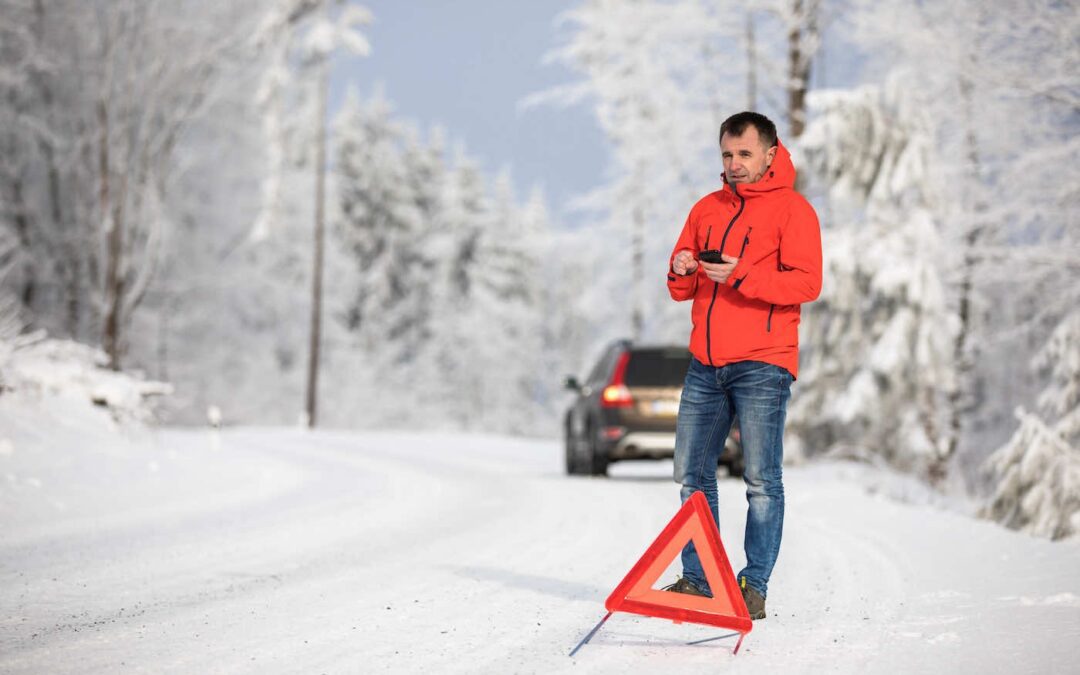
If your car breaks down on a busy road, highway, or in low visibility conditions, other drivers need to see you. Reflective warning triangles are lightweight, easy to set up, and visible from long distances. Place them behind your vehicle to alert oncoming traffic and create a safe buffer zone.
Road flares are another option. They burn brightly for fifteen to thirty minutes and are highly visible even in fog, rain, or snow. Flares are especially useful in winter when triangles might sink into snow or blow over in strong winds.
First Aid Kit
Accidents and injuries can happen during breakdowns or collisions. A basic first aid kit should include bandages, gauze pads, adhesive tape, antiseptic wipes, pain relievers, tweezers, and scissors. Pre-packaged auto first aid kits are available at most pharmacies and auto parts stores.
Check your kit every six months and replace expired items. If anyone in your family has specific medical needs, such as an EpiPen or inhaler, keep a spare in the kit as well.
Blankets and Warm Clothing
If your car breaks down in winter and the heater stops working, staying warm becomes your top priority. Keep a thick blanket, extra jacket, gloves, and a hat in your trunk year-round. Even in spring or fall, temperatures drop quickly after sunset, and you may be waiting outside for help.
Emergency thermal blankets are compact, affordable, and reflect body heat to keep you warm. They take up almost no space and can be life-saving if you are stranded in extreme cold.
Water and Non-Perishable Snacks
Breakdowns can take longer than expected, especially in remote areas or during bad weather. Keep a few bottles of water and non-perishable snacks like granola bars, nuts, or crackers in your kit. These supplies keep you hydrated and energized while you wait for help.
Replace food and water every few months to ensure freshness. Avoid items that melt in heat or freeze in cold, such as chocolate or fresh fruit.
Multi-Tool or Basic Tool Set
A multi-tool or small set of basic tools can help you make minor repairs or adjustments on the roadside. Include a screwdriver, pliers, adjustable wrench, and utility knife. These tools are useful for tightening loose parts, cutting zip ties or tape, or making temporary fixes until you reach a mechanic.
Tire Pressure Gauge
Low tire pressure reduces fuel efficiency, causes uneven wear, and increases the risk of a blowout. A simple tire pressure gauge lets you check your tires regularly and top them off at gas stations before problems develop.
Digital gauges are easy to read and accurate, but mechanical gauges are reliable and do not require batteries. Either option works well and costs just a few dollars.
Duct Tape and Zip Ties
Duct tape and zip ties are incredibly versatile for temporary repairs. Use them to secure loose parts, patch small holes, hold hoses in place, or reattach trim pieces. While they are not permanent fixes, they can keep your car functional long enough to reach a repair shop.
Ice Scraper and Snow Brush
In Halifax, winter weather means ice and snow on your windshield and windows. An ice scraper and snow brush are essential for clearing your glass safely before driving. Keep them in your car from November through April.
Choose a model with a long handle so you can reach the center of your windshield and the roof without straining. Some scrapers include built-in gloves or foam grips for cold-weather comfort.
Phone Charger or Power Bank
Your phone is your lifeline during a breakdown. It lets you call for help, check maps, or update family members. Keep a car phone charger plugged into your vehicle’s power outlet at all times, and carry a portable power bank as a backup in case your car battery dies.
Make sure your power bank stays charged by topping it off every few weeks. Most models hold enough charge to fully recharge a smartphone two to four times.
Seasonal Additions for Halifax Weather
Winter-Specific Items
Winter in Halifax requires extra preparation. Add these items to your kit from November through March:
- Folding shovel: Helps dig your car out of snow or clear a path for your tires.
- Traction mats or sand: Place under your tires to gain traction on ice or snow.
- Lock de-icer: Melts frozen door locks quickly so you can get inside your car.
- Window scraper with brush: Removes ice and snow from windows and mirrors.
- Hand warmers: Disposable heat packs keep your hands warm while working outside.
If you get stuck in snow and cannot free your car, professional winching services can pull you out safely. Learn more on the winching and recovery page.
Summer-Specific Items
Summer brings its own challenges, including heat, long road trips, and sudden rainstorms. Add these items to your kit for warmer months:
- Sunscreen: Protects your skin if you are stranded in direct sunlight.
- Extra water: Hot weather increases the risk of dehydration.
- Coolant: A spare jug of coolant can help if your engine overheats.
- Bug spray: Keeps mosquitoes and ticks away while you wait for help.
- Rain poncho: Keeps you dry if you need to work outside during a sudden downpour.
Where to Store Your Emergency Kit
Keep your emergency kit in your trunk or cargo area where it is easy to access but does not roll around while driving. Use a sturdy plastic bin, duffel bag, or backpack to keep everything organized and protected from dirt, moisture, and temperature changes.
If your trunk is full, store essential items like jumper cables, a flashlight, and your phone charger under a seat or in the glove box. The goal is to have critical supplies within reach whenever you need them.
When to Call for Professional Help
An emergency kit helps you handle minor problems, but some situations require professional assistance. Call for help if:
- Your car will not start even after a jump
- You have a flat tire and no spare
- You are stuck in snow, mud, or a ditch
- You smell smoke, gas, or burning
- You are in an unsafe location such as a highway shoulder
- You are unsure how to fix the problem
For fast roadside assistance including battery boosts, tire changes, fuel delivery, and lockout service, call (902) 593-3918 any time, day or night. You can also explore the full range of roadside assistance services available across Halifax and surrounding areas.
Frequently Asked Questions (FAQs)
What is the most important item in an emergency kit?
A charged phone and a way to charge it. Your phone lets you call for help, check maps, and communicate with family. Without it, even the best emergency kit has limited use.
How often should I check my emergency kit?
Check your kit every three to six months. Replace expired items, refill water, update batteries, and make seasonal adjustments such as adding winter gear or removing summer items.
Can I buy a pre-made emergency kit?
Yes, many stores sell pre-packaged auto emergency kits. They are convenient and cover most basics, but you may need to add items specific to your needs or local weather conditions.
Where should I keep my emergency kit in my car?
Store it in your trunk or cargo area in a waterproof container. Keep critical items like jumper cables, a flashlight, and a phone charger in the cabin where you can reach them quickly.
Do I need different kits for winter and summer?
You can use one kit year-round but add seasonal items as needed. Keep blankets and scrapers for winter, and add extra water and sunscreen for summer.
What if I do not have space for a full emergency kit?
Prioritize the essentials: phone charger, flashlight, jumper cables, first aid kit, and water. Even a small kit is better than nothing.
Should I include a fire extinguisher?
Yes, if you have space. A small auto fire extinguisher can help put out engine fires or other small flames before they spread. Make sure it is rated for automotive use.
Stay Prepared, Stay Safe
An emergency roadside kit is one of the smartest investments you can make as a driver. It costs less than a single tow, takes up minimal space, and could save you hours of stress, discomfort, or even danger during a breakdown.
Build your kit today, check it regularly, and drive with confidence knowing you are ready for whatever Halifax roads throw your way. If you ever need professional help, emergency towing and roadside assistance are just a phone call away at (902) 593-3918.
For more support, explore additional services including breakdown towing, accident towing, flatbed towing, and 24-hour emergency towing across Halifax and surrounding areas.
Be prepared, stay safe, and never drive alone when you have the right tools and support on your side.